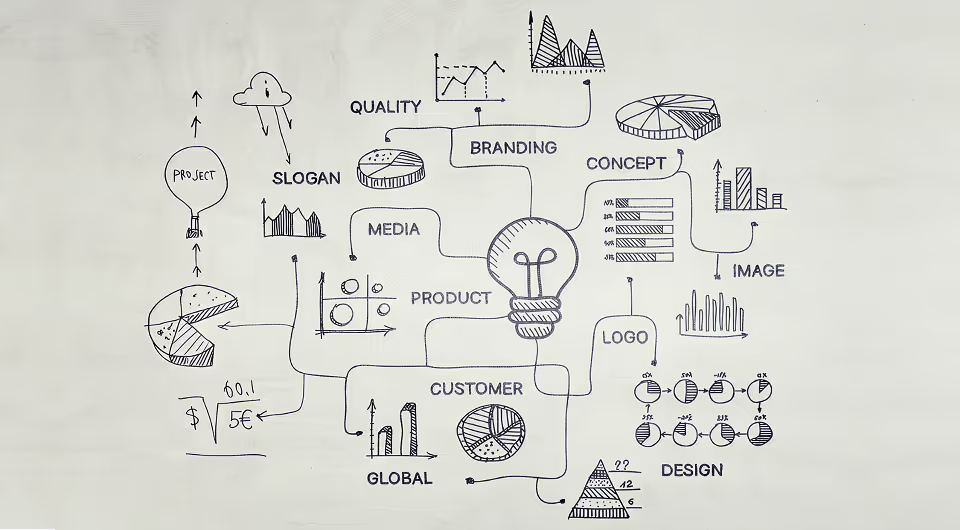
A rebrand that only touches the logo and colour palette usually underperforms, because the website is where most of a brand's credibility actually gets tested by a prospective customer. Doing rebranding and web development together — rather than handing off a new style guide to whoever happens to maintain the site — is what makes the investment pay off.
Why rebrand and website work need one team, not two
When a branding agency delivers a style guide and a separate web team implements it later, a predictable gap opens up: the style guide assumes design flexibility the CMS doesn't actually support, or the web team makes technical compromises the brand team never approved. We've inherited projects where a new brand's custom typography required licensing nobody budgeted for, discovered only after the web build was underway. Running both disciplines through one team means the brand system gets designed with the platform's real constraints in mind from day one.
What actually needs to change beyond the logo
A rebrand that moves the needle on the website touches more than visual identity:
- Information architecture — a rebrand is a natural moment to fix navigation that's grown organically and confusingly over years, since you're already asking users to relearn the site
- Voice and content, not just visuals — copy that still reads like the old positioning undermines a new visual identity immediately
- Component-level design system, not just a colour palette — buttons, cards, form fields, and navigation patterns need to be redefined as reusable components so the new brand actually holds together consistently across every page, not just the homepage that got design attention
- Photography and imagery direction — stock photography that doesn't match the new brand's tone is one of the fastest ways to undercut an otherwise strong rebrand
Sequencing that avoids wasted work
The order of operations matters more than most timelines account for:
- Brand strategy and positioning — before any visual work, get clear on what's actually changing about the market position, not just the aesthetic
- Visual identity system — logo, colour, type, but built as a documented system (Figma component library) rather than a static PDF style guide
- Content and information architecture — rewrite and restructure before templates are built, so templates are designed around real content, not lorem ipsum
- Component library and templates — build the reusable component set in code, matched to the Figma system
- Page-by-page implementation and QA, including redirect mapping if URLs are changing
Skipping straight from step 2 to step 5 is the most common mistake we see — it produces a site that looks like the new brand on the homepage and reverts to old patterns three levels deep where nobody double-checked.
Protecting SEO equity through the transition
A rebrand often comes with URL structure changes, and losing search rankings during the transition is avoidable with the right process:
- Map every existing URL to its new equivalent before launch and implement 301 redirects, not a blanket redirect to the homepage
- Preserve or improve existing page titles and meta descriptions rather than replacing them wholesale on brand-voice grounds alone
- Monitor Search Console closely for the first 60 days post-launch for crawl errors or ranking drops, and be ready to adjust redirects if something was missed
Sites that skip redirect mapping during a rebrand routinely lose 20–40% of organic traffic in the months following launch, and it can take two quarters or more to recover fully.
What this typically costs and how long it takes
A combined rebrand and website rebuild for a mid-size organization (brand strategy, visual identity, 20–40 page site) typically runs $35,000–$80,000 CAD over 4–7 months, depending on how much content needs rewriting and how many stakeholders are involved in brand approval.
If you're weighing a rebrand and wondering whether your current site can carry it, share your site and current brand materials and we'll tell you honestly what needs to change versus what can be preserved.
Surrey, BC
A full-service digital agency working in WordPress, Drupal, Shopify, Webflow, React, and React Native. We partner with universities, governments, and growing brands to ship sites and products that hold up after launch.