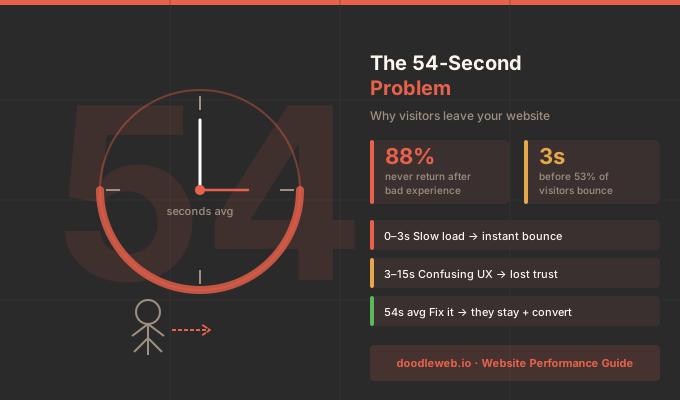
Most visitors decide whether to stay on a website within the first several seconds. Analytics platforms like GA4 and Microsoft Clarity consistently show the same pattern across our client base: a large share of sessions end before any meaningful scroll or click happens. The question worth asking isn't "how do we get more traffic" — it's "why are the people who already showed up leaving so fast".
What the data actually shows
Across roughly 40 client sites we've audited using Clarity session recordings and heatmaps over the past two years, the drop-off pattern breaks down into three recurring causes:
- Load time past 3 seconds on mobile. Once Largest Contentful Paint crosses 3 seconds on a 4G connection, bounce rate climbs sharply. We've measured this directly — sites we moved from 4.5s to 1.8s LCP saw bounce drop by 22-31%.
- No clear answer to "what is this and is it for me" within the first screen. Hero sections with stock photography and vague taglines ("Innovative Solutions for Your Business") force visitors to keep scrolling to figure out what the company does.
- Mobile layout breaks or requires pinch-zoom. Still common on older WordPress themes and un-audited Drupal 7 sites that were never rebuilt for mobile-first viewports.
Diagnosing your own site
Before rebuilding anything, pull three numbers:
- Core Web Vitals from PageSpeed Insights (field data, not lab data) — look at LCP, INP, and CLS specifically for mobile.
- Bounce/exit rate by landing page in GA4, segmented by device.
- Scroll depth heatmaps for your top five landing pages in Clarity or Hotjar — both have free tiers sufficient for this.
If LCP is under 2.5s and scroll depth still drops off in the first screen, the problem is messaging and layout, not performance. If LCP is over 3.5s, fix performance first — no amount of copywriting fixes a page that hasn't finished loading.
Fixes that actually move the number
For performance: compress and serve images as WebP/AVIF, defer non-critical JavaScript, and use a CDN (Cloudflare's free tier works for most small business sites). On WordPress, plugins like WP Rocket or Perfmatters combined with removing unused plugins usually gets LCP under 2.5s without a rebuild.
For clarity of message: the first screen needs three things visible without scrolling — what you do, who it's for, and one action to take next. We rewrite this as a single sentence exercise with clients: "We help [who] do [what] without [pain point]." If that sentence can't fit in a hero headline, the headline is too vague.
For mobile layout: test on an actual mid-range Android device, not just Chrome DevTools responsive mode. Devices like a Samsung A-series render fonts and tap targets differently than a simulated viewport, and tap target spacing under 44px is a common failure we still see on sites built five years ago.
A rebuild example
A Surrey-based home services client came to us with a 6.8-second mobile load time and a 71% bounce rate on their homepage. We rebuilt on a lightweight WordPress stack (Bricks Builder, no page-builder bloat, self-hosted fonts), compressed a 40-image gallery from an average of 2.1MB to 180KB per image, and rewrote the hero to lead with their guarantee instead of a slogan. Three months post-launch: LCP at 1.6s, bounce rate down to 44%, and phone calls from the site up 60% year over year. None of that required new traffic — it came from keeping the visitors who were already arriving.
What to prioritize this month
If you only have time to do one thing, run a PageSpeed Insights test on your homepage on mobile. If the score is under 50, performance is costing you visitors before your message even gets a chance to land.
Want a straight answer on why your bounce rate is high? Send us your homepage URL and we'll tell you what's driving visitors away.
Surrey, BC
A full-service digital agency working in WordPress, Drupal, Shopify, Webflow, React, and React Native. We partner with universities, governments, and growing brands to ship sites and products that hold up after launch.