A higher-education Drupal 7-to-8 migration should be planned as a replatform, not an in-place update. The safest approach coordinates content mapping, theme implementation, backend development, testing, governance, training, and launch support in one programme.
Drupal 8 is now a historical destination rather than the version an institution should select for a new migration. This guide explains the Drupal 7-to-8 transition because it remains useful for understanding the architectural break after Drupal 7. Teams migrating today should target a currently supported Drupal release.
What changed between Drupal 7 and Drupal 8?
Drupal 8 introduced a substantially different architecture and development model. That meant Drupal 7 sites could not be treated as if they were receiving a routine update. Content could be migrated, but themes, custom code, module choices, and operational assumptions needed review against the destination platform.
For a university or college, this distinction affects planning. A site may have many content owners, departmental templates, program information, forms, permissions, and external systems. Each dependency needs a destination decision before the cutover can be considered safe.
What should a university inventory first?
Begin with evidence. Create an inventory that the technical, content, and communications teams can review together.
| Area | What to record | Why it matters |
|---|---|---|
| Content | Types, fields, taxonomies, files, revisions | Defines what must move and how it maps |
| Theme | Templates, components, navigation, forms | Reveals front-end dependencies on Drupal output |
| Backend | Custom modules, contributed modules, jobs | Identifies rebuild, replacement, and retirement work |
| People | Roles, permissions, approval paths | Protects publishing governance after launch |
| Integrations | Data sources, identity, CRM, search | Establishes external testing owners |
| Search | URLs, metadata, redirects, sitemaps | Protects discovery and inbound links |
Do not treat the inventory as a list produced only by developers. Editors often know which fields are actually used, which workarounds have become essential, and which templates no longer serve the institution.
How should theme work be planned?
Theme implementation belongs inside the migration plan because templates depend on the destination content model. A page cannot be tested properly until the backend supplies the fields, states, and navigation the theme expects.
A practical sequence is:
- Select representative pages for every important content pattern.
- Map each Drupal 7 template to its destination pattern.
- Define the fields and states the new theme must support.
- Build reusable components against real migrated content.
- Test responsive layouts, keyboard navigation, forms, and errors.
- Review content authoring and public output in the same acceptance cycle.
This sequence reduces the risk of a polished theme arriving before the migrated content and backend behaviour are ready to support it.
How should backend development be scoped?
Backend scope should be based on required behaviour, not a promise to recreate every old module. For each piece of functionality, decide whether to migrate it, rebuild it, replace it with maintained functionality, consolidate it, or retire it.
The decision should consider who uses the feature, what information it handles, what would break if it were unavailable, and how it will be tested. Custom code deserves particular scrutiny because undocumented assumptions often surface only when representative content and integrations are exercised together.
Backend planning should also define permissions and editorial workflow. Universities commonly distribute publishing across schools, departments, and central teams. The destination needs clear roles and approval paths that reflect the operating model rather than simply copying old permissions without review.
How do content and URL migration stay controlled?
Map content fields explicitly. A migration worksheet should show the source type and field, destination type and field, transformation rule, validation method, and owner. This makes omissions visible before launch.
URLs require the same discipline. Preserve stable addresses where practical. Where an address changes, create a one-to-one redirect to the closest relevant destination. Avoid sending unrelated retired pages to the homepage, because that is less useful to visitors and search engines.
Validation should compare counts and samples, but neither is sufficient alone. Counts can reveal missing records; representative page review can reveal broken formatting, incorrect relationships, or files that technically moved but no longer work in context.
What testing is essential before cutover?
A migration should be tested as complete journeys, not as isolated screens.
- A prospective student can find a program and reach the intended next step.
- An editor can create, review, revise, and publish the content they own.
- Navigation and internal links lead to valid destinations.
- Forms submit successfully and reach the correct recipient or system.
- Search, filtering, media, and downloadable files behave correctly.
- Redirects resolve to relevant pages without loops or chains.
- Keyboard and assistive-technology users can complete critical tasks.
- Monitoring, analytics, and error reporting are ready for launch.
The institution should agree on severity levels and launch blockers before testing begins. That keeps prioritisation consistent when the deadline is close.
How should the launch be organised?
Use a written cutover plan with named owners, dependencies, checkpoints, and a rollback decision. The plan should state when content changes pause, when the final migration runs, who validates the live site, and how issues are escalated.
Post-launch support should not be improvised. Assign owners for redirects, content corrections, backend errors, theme issues, and editor questions. Review the highest-value journeys first, then work through the broader validation list.
What did DoodleWeb do for Berklee?
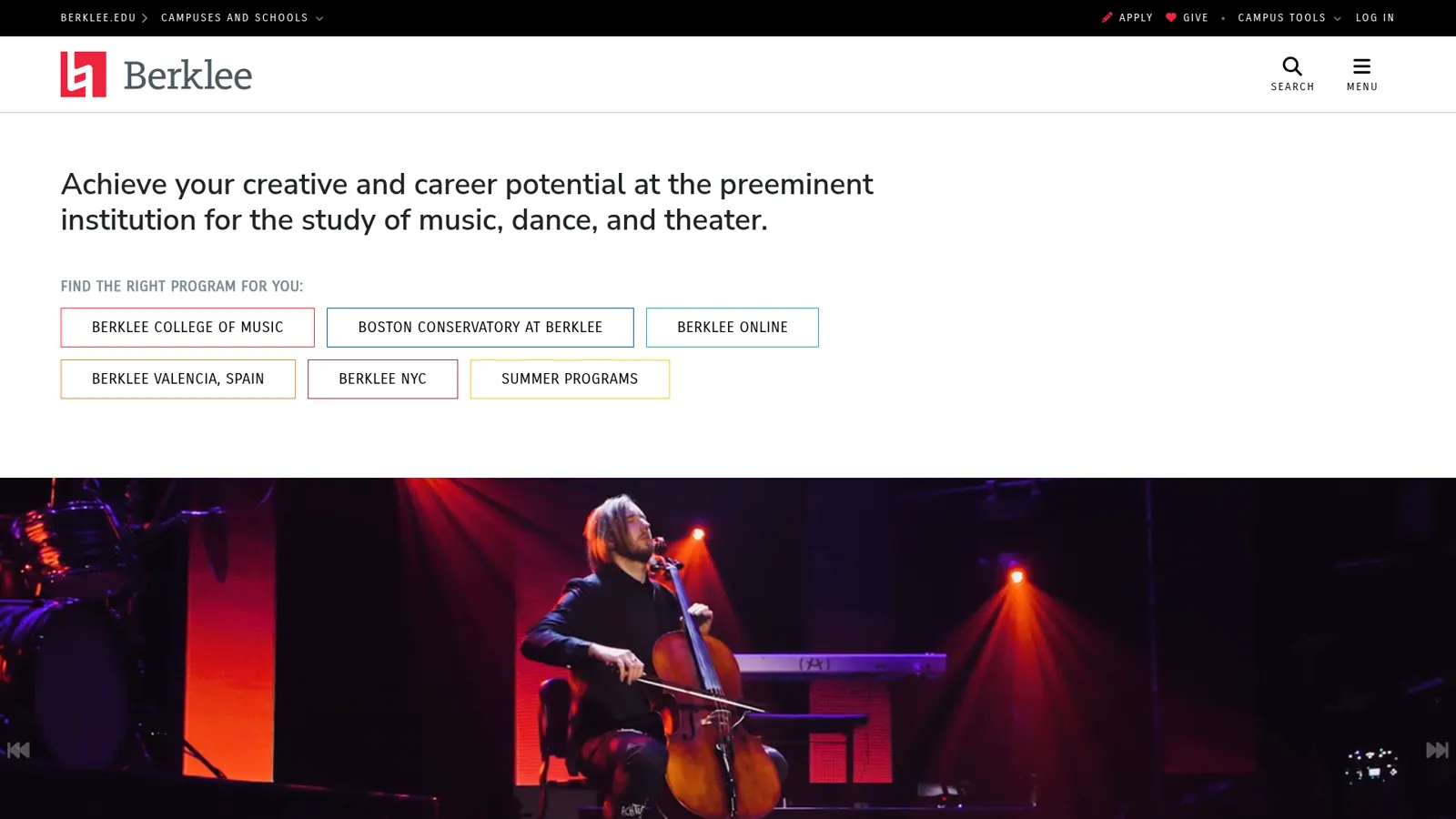
DoodleWeb helped Berklee College of Music transition from Drupal 7 to Drupal 8. The confirmed engagement included theme implementation and backend development, and DoodleWeb helped support a successful transition.
We do not publish undisclosed project metrics, private implementation details, or a client quotation. The case is relevant because it demonstrates direct experience coordinating theme and backend work through a higher-education Drupal transition. Read the Berklee Drupal migration case study and the longer article on Berklee's Drupal 7-to-8 transition.
What lessons still apply to current Drupal migrations?
The destination version has changed, but five principles remain useful:
- Treat a legacy Drupal move as a replatform.
- Make content, theme, and backend dependencies visible early.
- Test with representative migrated content rather than placeholders.
- Give editorial governance the same attention as technical architecture.
- Plan cutover and post-launch support before development is complete.
For a current project, target a supported Drupal release and review the destination against your hosting, module, integration, and maintenance requirements. Our Drupal 7-to-11 migration service describes one current path.
How can DoodleWeb help a higher-education team?
DoodleWeb supports university and college Drupal work across discovery, migration planning, theme implementation, backend development, content mapping, testing, and launch. We can lead the full transition or work alongside an internal web team with a clearly defined scope.
Start with our Drupal migration services for higher education, review Drupal development for universities, or contact DoodleWeb Canada with the current version and the main transition constraints.
Related reading
- Berklee Drupal 7-to-8 case study
- Berklee's Drupal 7-to-8 transition
- Drupal migration services for higher education
- Drupal 7 end-of-life migration guide
- Drupal 11 migration field guide
Surrey, BC
A full-service digital agency working in WordPress, Drupal, Shopify, Webflow, React, and React Native. We partner with universities, governments, and growing brands to ship sites and products that hold up after launch.